In light of today’s stunning assassination news out of Guinea-Bissau, it’s worth revisiting this fine Washington Post investigation from last August. The West African nation has apparently become a key transshipment point for Colombian cocaine traffickers, en route to major European markets:
[Guinea-Bissau] is best known for its cashews and mangoes, but its main attractions for the cartels are its weak government and coastal waters dotted with scores of uninhabited islands.
Officials said the drug traffickers don’t export directly to Europe because European navies and air forces would detect large shipments. So they send ships and planes loaded with cocaine to West Africa. Some is unloaded at abandoned airstrips in the islands off Guinea-Bissau; more is dropped at sea and picked up by small boats.
The cocaine is then broken up into still smaller loads and sent on to Europe in light aircraft or by human mules — in 2006, Dutch police discovered on a single flight to Amsterdam 32 people traveling from Guinea-Bissau with hidden cocaine.
So much cocaine is moving through Guinea-Bissau that plastic-wrapped bricks of it have washed ashore, where officials said confused villagers tried using the unfamiliar substance to fertilize their crops or paint their walls.
Bangladesh has its fair share of problems nowadays, including the aftermath of a bloody mutiny and a shaky transition back to democracy. Since the world can only process so much Bangladeshi news at once, some equally troubling stories have yet to receive the attention they deserve. Exhibit number one: A massive rat infestation in the nation’s southeast.
It’s bad enough that the rats are chewing their way through the region’s crops, threatening the food supply for over 120,000 local residents (many of them members of various hill tribes). The larger concern now is that the invasion will touch off an epidemic of bubonic plague, which could cause the entire nation to be put under quarantine. As this Agence France Presse article makes clear, such a quarantine would be unprecedented in modern times; the Surat plague of 1994 is the closest we’ve ever come to taking such a radical step.
The solution for Bangladesh? A Scottish program may show the way forward. Or the Bangladeshi government can just start cloning Binoy Kumar Karmakar, the country’s reigning rat-catching champ.
It’s videos like these that leave me seriously conflicted ’bout the fact I remember so little of the Seventies. Sort of love how snowmobiles were the height of vehicular technology back then—along with glass-domed helicopters, of course.
Comments Off on Another Action Jackson ForerunnerTags:1970s·toys
A big slab of my research for Now the Hell Will Start took place in the bowels of the Schomburg Center for Research in Black Culture. I spent way too many hours jacked into the library’s microfilm machine, flipping through wartime copies of the Chicago Defender. As you might expect, a lot of what caught my eye wasn’t necessarily germane to my tale. But I’m a sucker for time-capsule curios, and I’d linger over vintage ads, police blotters, and cartoons for hours on end.
The one cartoon I really obsessed over was a strip called Speed Jaxon, which was sort of a cross between Mark Trail, James Bond, and the 1988 Carl Weathers vehicle Action Jackson. (The Weathers movie is solely notable for the hero’s painfully awful quip after roasting a baddie with a flamethrower: “How do you like your ribs?”) Speed Jaxon snagged me not just with its obvious camp value (eat your heart out, Undercover Brother), but also with its earnest attempts at political relevancy. I remember this whole storyline, which lasted for months, in which the cartoonist threw Speed in a Nazi P.O.W. camp along with a bunch of white Southerners. You can guess at the message, which was every bit as heavy-handed as you might imagine. But there was also something oddly touching about the cartoonist’s plea for basic human dignity.
Alas, the strip’s take on non-Western cultures is, shall we say, rather un-PC.
Check out the Speed Jaxon archives on Thrillmer, a site dedicated to reviving “the adventurous spirit of yesterday” as depicted in bygone comics.
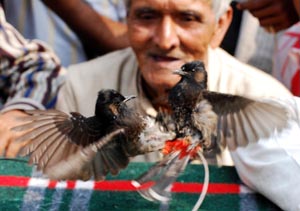
I was watching a rerun of Six Feet Under last night, and caught a throwaway factoid that had slipped from my mind: Chimps are more closely related to us than they are to gorillas. My first thought upon hearing this, of course, was, “Well, where does that leave the poor monkeys on the primate scale?”
The photo above, snapped by my good pal Daddy Like on his recent trip to India, provides some clue. It also leaves me wondering how this situation was resolved.
After you’ve finished pondering the roots of primate violence, check out Daddy Like’s radio show, Fresh Produce, which broadcasts semi-regularly from “an undisclosed location in South London.” Perhaps the only show in existence that plays both Herbie Mann and The Coup on a regular basis.
My occasional Hulu habit has brought me in contact with a series of anti-reckless driving ads aimed at teens. They’re actually kinda clever—a game-show host magically appears in a careening car, offering the most fabulous prize of all (continued life). All the commercial’s protagonist has to do is tell his dumb-dumb pals to slow down—a square deal, if I’ve ever heard one, and an indisputably noble cause.
But will it save any lives? For that matter, do public service announcements have any demonstrable effect on population-wide behavior? There are oodles of peer-reviewed studies, but they all seem flawed to me—perhaps unavoidably. For starters, all of the most recent studies have tended to focus on either anti-drinking/drug or anti-AIDS messages, so there really isn’t much data pertaining to, say, PSAs that inveigh against absentee fathers. More importantly, the researchers can do little except ask ad watchers to report their reactions. Not too surprisingly, seeing an ad on the consequences of AIDS will make you more likely to stock up on condoms—but only when you’re in the “recommendation condition” (i.e. just saw the spot). Where’s the follow-up on how these studies’ participants fared months or years after the fact?
My hunch is that the best PSAs are ones that sear a particularly troubling image in your mind. Tough to get more searing than this Canadian classic. (WARNING: Not for the faint of heart. Seriously, I’m not kidding. The Canadians don’t mess around.)
Apologies for today’s lighter-than-usual posting. I’m mobile, working on the Now the Hell Will Start movie and enjoying Assamese tea at a Cobble Hill joint. Rest assured, the esoterica will recommence in full tomorrow.
In the interim, please enjoy one of Microkhan’s guilty pleasures: Hilariously negative movie reviews. There just aren’t many harsher thumbs downs than the one Entertainment Weeklyoffered the dueling lambada movies of 1990: Lambada and The Forbidden Dance. As my pal Ta-Nehisi would say, the essence:
In ”Lambada,” the hero is a high school math teacher by day, a lambada dancer by night. After strutting his stuff at the local nightclub, he goes into the back room and heads up a special-education program for wrong-side-of-the-tracks kids. The name of the program? Galaxy High (because these kids are reaching for the stars!). If nothing else, ”Lambada” has the distinction of being the first dance movie to climax with a trigonometry competition.
I’ll get back at you tomorrow. Don’t forget to reach for the stars.
NW Rota-1, located near the Mariana Islands, is arguably the most active undersea volcano ever witnessed by man. The video above was taken during a 2006 mission to the Pacific’s depths; a University of Texas at Dallas professor will soon return to the scene of the violent eruption, aboard his trusty Shinaki 6500 submarine. Hope he’s able to kit it out with a high-def camera this time.
The most troubling part about this story is not that Nigerian e-scammers were likely able to wheedle a few pounds out of Jack Straw’s pals and constituents (who really should have known better, given the con artists’ straight-out-of-Lagos grammar and syntax). No, what’ll keep me up tonight is that fact that Britain’s former Foreign Secretary, a man charged with the most delicate and complex diplomatic tasks imaginable, still uses frickin’ Hotmail.
That’s how many children have gone missing in Delhi since 2006, and have yet to be found. For comparison’s sake, a Department of Justice study (PDF) found that about 2,500 American kids who went missing in 1999 had not been located by the turn of the millennium. The population of the United States at that time was 272 million; the population of Delhi is a shade under 12 million.
There are widespread fears that multiple serial killers may be on the loose, perhaps in order to sell the children’s eyes and organs. The police, unconvincingly, claim that many of the missing kids are simply eloping. Their idea of a solution? A helpline.
Comments Off on Seven Thousand, Four HundredTags:crime·Delhi·India
The happy gentleman to the right is José Eduardo dos Santos, Angola’s president for the past 30 years. During that time, he has allegedly managed to skim $4 billion from the nation’s oil revenues—quite a despicable feat, given that Angola remains one of the world’s poorest countries, with 70 percent of the population living on less than $2 per day. And a quarter of Angolan children fail to reach the age of five.
Dos Santos would be more widely reviled if he hadn’t been so assiduous about squelching any sort of dissent. One of the few journalists brave enough to speak out has been Rafael Marques, who penned an infamous 1999 anti-dos Santos polemic entitled “The Lipstick of Dictatorship”. For his troubles, Marques was arrested, tried, and convicted of “abuse of the press.”
Thanks to the magic of the Tubes, however, Marques’s words have been revived. Check out the column here. If you’re not a close follower of Angolan politics, it’s a bit tough to parse. But as you read, keep in mind that Marques knew he was destined for the slammer as he jotted words on paper. Can’t say I’ve ever been in similar straits.
If you ever find yourself at the intersections of Skull Valley and Stark roads in western Utah, take a long peek out the car window. See that barren nothingness that extends as far as the eye can see? That’s paradise for budding Air Force jocks: The Utah Test & Training Range, where the munitions of tomorrow are exploding today. The range measures over 2,600 square miles, making it a fair bit larger than both Rhode Island and Delaware. The military can get away with exploding a 10 kiloton bomb here without having anyone notice (save for satellites).
The UTTR is also where vintage missile motors are incinerated into nothingness, as part of our START I treaty obligations.
Don’t linger too long at that intersection, though. Not only are you unlikely to see anything go kablooie—remember, the UTTR is bigger than frickin’ Delaware—but the Air Force doesn’t take too kindly to snoops. If you must, make friends with a local and have ’em invite you out for UTTR’s annual Family Day. Hot dogs, softball, and 500-pound JDAM bombs for all.
Given my curious fascination withSri Lanka and its long-running ethnic conflict, I thought it wise to provide some context. The island nation’s 34-year civil war is pretty baffling, and the partisan journalism on both sides doesn’t make it easy to parse the details. That’s why I heartily recommend Sri Lanka: History and the Roots of the Conflict, edited by an even-handed British academic. The introduction, in particular, is worth a gander; the indictment of patronage politics is sad and troubling:
The economy became politicized with the nationalization of certain sectors, and more importantly as political parties and MPs began to control access to all sorts of resources: to objects, to finance, and to jobs. The institutions of [Sri Lanka] were increasingly subsumed by the political machines and alliances of politicians; access to the resources of the state became a matter of access to politicians. One effect of this was that Tamils were effectively excluded from the channels through which resources were distributed. Ties between MPs and their followers became of utmost importance, and, in such a situation, for any MP representing a Sinhala area to allocate resources to a Tamil area was madness. Tamils became steadily more and more alienated from the state.
Fighting bulbuls attract thousands of onlookers during Bhogali Bihu, and countless rupees are wagered on the bouts. Songbirds aren’t too aggressive by nature, so the birds’ handlers must fill them with an aggression-inducing drinks—one that would make a fine addition to hoity-toity cocktail lairs here in New York:
“We make a concoction containing bananas and some locally available intoxicating herbs, some black pepper, clove, and cinnamon, and feed the bird regularly to make them strong and sharp for the fight,” local resident Madahab Bora said.
No word on how many bulbuls meet grisly ends during these contests, though I reckon the number is quite high. The survivors are set free, though their ensuing songs must surely be of a darker nature—sort of like Brian Wilson after his agoraphobia kicked in.
Oh, and there’s buffalo combat, too. PETA really needs to look into opening a branch office in Guwahati.
Comments Off on The Fighting Bulbuls of AssamTags:animals·Assam·India
The perfect end-of-day time waster: A Zen koan generator. Keep refreshing ’til you get one that applies. It took me three spins to reach “Gutei’s Finger,” which is equal parts cruel and wise. I, for one, would certainly swap a digit for eternal bliss.
An excellent New York Times piece on the murder of Oakland newspaper editor Chauncey Bailey is today’s must-read, at least if you (like me) are something of a journalism geek. The article’s one flaw is an all-too-brief namecheck of The Arizona Project, a multi-paper investigation into the 1976 assassination (via car bomb) of Arizona Republic reporter Don Bolles. Check out this 2006 retrospective on the Project, which was more heroic than genuinely successful.
It doesn’t take a fancy head-shrinking degree to guess why some folks like to imitate cops. But we’ll let an expert break it down for you nonetheless. “The ordinary person who impersonates a police officer is likely to feel powerless in some way in their life,” says Dr. Phillip Resnick, director of forensic psychiatry at Case Western Reserve University in Cleveland.
That explanation certainly makes sense in the recent case of Joshua D. Kay, a Wisconsin jail inmate who just got pinched for telling his cellmates that he’s actually an undercover sheriff. The strange part? Kay was in the clink for impersonating a police officer.
But what about if you’re a seven-foot-tall millionaire? The “powerless” line doesn’t hold quite as much water. Which is why whenever I read about case’s such as Kay’s, I can’t help but think back to the curious saga of Olden Polynice. Nine years ago, Polynice was pinched twice for playing ersatz cop. Dude even sported a fake badge and allegedly identified himself as a member of the non-existent “California Sheriff’s Department.” (Polynice’s agent claims that the motorists misheard his client, and that the mediocre center was instead flashing an NBA ID card and stating, “I am a member of the Utah Jazz.”)
At least Polynice received an appropriate punishment: He was forced to end his career with my dearly beloved, eternally terrible Los Angeles Clippers.
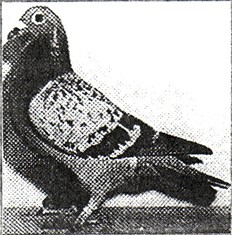
The handsome squab pictured at right is none other than Burma Queen, a charter member of the Army Pigeons Hall of Fame (PDF). Back in 1944, this brave pigeon helped save an entire battalion of Allied troops, by racing 320 miles with a key SOS message. She was only five months old at the time—not sure how that translates into pigeon years, but the Hall of Fame committee seemed impressed by BQ’s precociousness.
Strangely, though the Army Pigeons Hall of Fame has seen fit to induct such luminaries as Jungle Joe and Blackie Halligan, the great Cher Ami does not yet seem to have been honored. That’s what you get for doing your deeds during World War I, I reckon.
Learn more about Army pigeons by checking out Al Croseri’s documentary The Pigeoneers. It’ll change the way you think about those mangy featherballs.
I’ve previously delved into how physical anomalies can sometimes be a boon to athletes; check out this recent post on Muttiah Muralitharan, the great Tamil cricketeer, whose crooked arm has made him an especially devious bowler. Bree Schaaf’s peculiarity, by contrast, doesn’t necessarily make her a better bobsledder. But it’s nonetheless played a role in her athletic success.
Schaaf started out as skeleton slider, and was good enough to make the U.S. national team—but not good enough, alas, to become a meaningful contender. Her main problem? A larger-than-normal head:
“Every girl here wears an extra small helmet except for me,” Schaaf said. “I wear a medium. I’ve got a big noggin.”
A small head is important when lying face down on a skeleton sled because of the G-forces on sliders’ bodies in the turns. Because her head is big, Schaaf couldn’t hold it high enough to see in high-speed turns.
“I was racing blind,” Schaaf said. “When they’d air races on TV, you could actually hear my helmet scraping on the ice.”
I’ve been fascinated by Bhutan ever since reading this 1999 New York Times piece, in which Peter de Jonge bears witness to the nation’s first day of television. The article includes one of the most immortal lines in all of magazine-dom:
History strongly suggests that few people will choose to spend eight hours a day knee deep in mud behind an ox if there’s an alternative.
It seems like things have been progressing a wee bit in Bhutan over the past decade. The World Bank just announced that it will help Druk Air, the kingdom’s only carrier, expand its operations. That shouldn’t too terribly hard, seeing as how Druk Air currently owns just two measly aircraft. But something will have to be done about Bhutan’s airport situation, which is even more dire. Paro International Airport is the alpha and omega of the nation’s aviation infrastructure, and it’s a beast to use; it’s located 7,300 feet above sea level, where the weather is less-than-ideal. As of early 2008, only eight pilots were deemed skilled enough to land there without slamming into the surrounding mountains. And I thought Dushanbe Airport was tough.
Comments Off on Bhutan’s Only AirportTags:aviation·Bhutan
Urban theorist Mike Davis is usually credited with coining the phrase “bum proofing,” back in his 1990 classic City of Quartz. The target of Davis’s ire back then was a redesigned bus bench, turned cylindrical so as to discourage sleeping. Countless seating areas have since been retrofitted to prevent the incursions of bums; the most popular method is install blocks mid-bench, so that any attempts at sleeping will result in torturous back pain.
Such bum proofing is a main component of Crime Prevention Through Environmental Design (CPTED), a philosophy hatched by the same folks who brought us such wonders as well-lit parking areas and Dumpsters that “do not create blind spots or hiding areas.” Nice sentiments, but what about striking a balance between the discouragement of loitering and that whole “love thy neighbor” axiom? Bum proofing has gotten a wee bit out of control lately, with public areas now making it tougher to sit, let alone sleep. Anyone who’s ever spent time in Penn Station knows what I’m talking about—you try squeezing onto the ledge along the Acela waiting area, whose sloped walls are obviously designed to make rest impossible.
The Australian Navy is hunting for the shark that recently mauled one of its more experienced divers. How will the Aussies know when they’ve found the real culprit, rather than just another shark? It ain’t easy.
Back in my days as a cub reporter, I worked the hacker beat for U.S. News & World Report. My first story was about a crack of the Pentagon dubbed Solar Sunrise. It was perpetrated by a trio of young geeks: Two California juveniles and their online mentor, Ehud “Analyzer” Tenenbaum of Israel. The crime was a lot less spectacular than the Feds made it out to be—no data was stolen or altered—but Tenenbaum nonetheless became a minor celebrity in his native country. He even became a spokesman for an Israeli computer vendor (see ad at top right).
Tenenbaum did a short stretch in Israeli prison, and was rumored to be headed for a cozy job with the Mossad. That made perfect sense, since the kid didn’t strike me as genuinely bent on destruction, or even personal enrichment. He was, rather, a true social misfit who’d found some measure of peace by exploring the world of machines. (Tenenbaum might well have a minor touch of Asperger’s, now that I think of it.)
But I reckon things didn’t turn out as I’d anticipated. The Analyzer now languishes in a Calgary jail, accused of masterminding a sophisticated fraud scheme. The secret-agent job never panned out, and Tenenbaum’s criminal record made him an anathema to private employers. So he allegedly got into card-number swiping instead. What a waste.
Really wish I had the funds for an early March trip to The Hague, as this event (PDF) looks damn nigh unmissable. It’s certainly not the longest business seminar I’ve ever seen, which I guess says a lot about the state of the North Korean economy. Poor Evert Jacobsen, for example, only gets 15 minutes to explain his potato development project.
The seminar’s sponsor, GPI Consultancy, has been a longtime advocate of outsourcing IT work to North Korea. GPI swooned over the nation’s tech potential in a 2006 report (PDF), singling out the animation industry in particular.
Maybe so. But anyone looking for cheap DPRK labor would be well-advised to read this horror story first. And keep in mind that Dear Leader is all sorts of crazy.
Life was apparently no picnic for the Pleistocene epoch’s woolly mammoths. For starters, they had to be super-wary of where they clomped—one careless step and the tar pits would snag you for all eternity (as well as the eventual edification of schoolchildren). And there were always plenty of saber-toothed tigers lurking about, waiting to snatch away your 400-pound babies.
Above all, there was a wily new-ish predator named man, emboldened by his fantastic creation: the atlatl, a crude system for shoulder-launching lethal darts. According to the esteemed Atlatl Bob (née William Robert Perkins), atlatls are what finally put our species atop the food chain, a position from which we’ve never looked back.
So it’s fitting that the atlatl has its fair share of evangelists and admirers in the present day. Check out Atlatl Bob’s video tutorial on the topic, which features the masterful first line: “Humans…need to throw things!” And don’t miss the next atlatl competition in your neighborhood. The championships are in Michigan this year.
I tend to distrust state-run news organizations, so color me skeptical upon reading this “doth protest too much” story from Russia’s RIA Novosti. It seems there have been some rumors floating about that crewmen on a Russian frigate came down with scurvy while patrolling the waters off Somalia. The official denial goes:
“Reports of technical failures that allegedly occurred and crew members suffering from scurvy are crude and cynical mistruths that insult the sailors and their relatives,” Capt. 1st Rank Igor Dygalo said.
“Technical failures” cause scurvy? Like, the food replicator was broken and you couldn’t create any citrus fruits? Or did you accidentally fill your pre-voyage larders with nothing but hard tack and dried, salted meat?
If all had gone as planned, the S.S. American Star would now be a floating hotel in Thailand. But while being towed to its new home 15 years ago, the decommissioned luxury liner ran aground in the Canary Islands. The ship was left there to rot, slowly cracking apart and slipping beneath the waves. It finally disappeared for good in November, after long serving as a ghostly tourist attraction.
Few of those tourists were aware of the American Star’s curious history, recounted in my book, Now the Hell Will Start. Eleanor Roosevelt christened the ship in 1939, dubbing it the S.S. America; the vessel was meant to be our nation’s answer to Britain’s Queen Mary. But World War II squelched those ambitions, and the America was transformed into the U.S.S. West Point, an 8,000-passenger troop transport. It’s the ship that Herman Perry took to India, where fate dealt him a peculiar hand.
There are several more photos of the ship’s skeleton at Artificial Owl, a fantabulous site dedicated to chronicling abanoned man-made creations. While you’re over there, don’t miss the Bulgarian “flying saucer”.
No, I’m not talking about the DJ who Nas shouts out in “Halftime”. The object of this post’s praise is Turkish “artistic billiards” champion Semih Sayginer, aka “Mr. Magic”, aka “the Turkish Prince”. This guy’s such a supreme wiz that none other than Eric J. Yow proclaims him a personal hero. Eric Freakin’ Yow, I say!
A storm’s a-brewing over Nevada’s plan to slay a whole bunch of cougars. This is being done in the name of protecting the state’s deer, who we’re told now number 108,000 (down from 240,000 a decade ago).
How did Nevada come up with such an accurate census of deer? A helpful guide to counting ruminant mammals, primarily with the aid of bright headlights. Or, if money is no object, you can get all thermographic if you’d like.


 Bangladesh has its fair share of problems nowadays, including the aftermath of a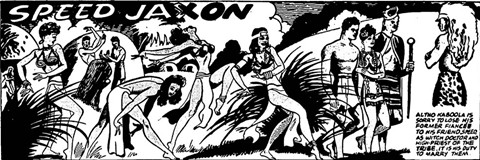

 Apologies for today’s lighter-than-usual posting. I’m mobile, working on the
  The most troubling part about
  The happy gentleman to the right is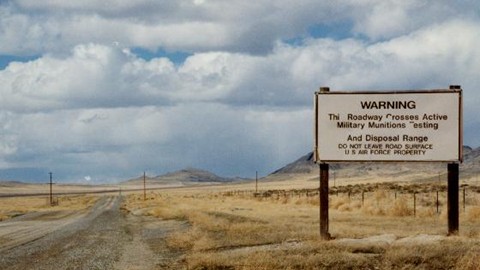
 Every year ’round this time, the denizens of
  It doesn’t take a fancy head-shrinking degree to guess why some folks like to imitate cops. But we’ll let an expert break it down for you nonetheless. “The ordinary person who impersonates a police officer is likely to feel powerless in some way in their life,”
  The handsome squab pictured at right is none other than Burma Queen, a charter member of the
  I’ve previously delved into how physical anomalies can sometimes be a boon to athletes; check out
  Urban theorist
  Back in my days as a cub reporter, I worked the hacker beat for U.S. News & World Report. My first story was about a crack of the Pentagon dubbed Solar Sunrise. It was perpetrated by a trio of young geeks: Two California juveniles and their online mentor, Ehud “Analyzer” Tenenbaum of Israel. The crime was a lot less spectacular than the Feds made it out to be—no data was stolen or altered—but Tenenbaum nonetheless became a minor celebrity in his native country. He even became a spokesman for an Israeli computer vendor (see ad at top right).
 Really wish I had the funds for an early March trip to The Hague, as